

We offer a new payment plan through Pay Pal
*** We Now offer a Payment plan through PAY PAL***
see option at check out
See info at check out
If you have been looking or tried to join a class anywhere in BC you know the wait lists. We are adding classes all the time but book fast.
Class Dates
April 1 /2026
June 1 /2026
Oct 1 / 2026
2100.00
200.00 (time of booking) 500.00 (1 month out)Full payment due on or before class no refunds 10 days from start of class
Hardship cases will be looked at separately
Call to book your spot.
Book now as there are wait lists everywhere.
236 795-1122
The Emergency Medical Responder training equips you with the skills to assess, intervene, and provide continuous care to patients while at work, responding to calls, or during transport to a healthcare facility.
This comprehensive course covers advanced first aid and cardiopulmonary resuscitation (CPR) skills, which are essential to carry out appropriate patient assessments, interventions, and ongoing care in the workplace or emergency scene.
EMR is a standalone course, but a bridging course also provides learners with a way to move from Canadian Red Cross First Responder to Emergency Medical Responder, recognizing their existing skills and knowledge in a condensed time frame.
First Responder to Emergency Medical Responder Bridging pre-course requirements include proof of current Red Cross First Responder certification.
Duration
120 hours
Prerequisites
Participant must be certified in Standard First Aid with CPR level C.
-
Successfully demonstrate the required skills
-
Minimum 75% mark for written, closed book, knowledge evaluation
-
Successfully complete two evaluated scenarios (one medical and one trauma)
-
Attend and participate in 100% of the course
Certification
-
3-year certification in Emergency Medical Responder (digital certificate issued upon successful completion)
-
1-year Basic Life Support (BLS) and CPR
-
The Professional Responder
-
Responding to the call
-
Infection prevention and control
-
Anatomy and physiology
-
Assessment
-
Airway management and respiratory emergences
-
Circulatory emergencies
-
Shock
-
Hemorrhage and soft tissue trauma
-
Musculoskeletal injuries
-
Chest, abdominal and pelvic injuries
-
Head and spinal injuries
-
Acute and chronic illnesses
-
Poisoning
-
Environmental illnesses
-
Pregnancy, labour and delivery
-
Special populations
-
Crisis intervention
-
Reaching, lifting and extricating patients
-
Transportation
-
Multiple-casualty incidents
-
Pharmacology
-
Marine environment
-
Workplace
-
Includes any other content required by specific legislation
-
Participant Materials
-
Canadian Red Cross Emergency Care for Professional Responders Reference Text
-
Canadian Red Cross Emergency Care for Professional Responders Workbook (optional)
Common Career Opportunities
In 2026, an Emergency Medical Responder (EMR) certification serves as a primary entry point into both public and private emergency medical services
.
Common career paths for certified EMRs include:
Emergency and Public Services
-
Ambulance Services: Many EMRs work for regional services like the BC Ambulance Service or Alberta Health Services, often starting in rural or on-call roles.
-
Fire Departments: EMR certification is a standard requirement for many municipal and industrial firefighter positions.
-
Law Enforcement & Corrections: Some agencies employ EMR-trained staff to handle medical emergencies within specialized units or facilities.
Industrial and Remote Worksite Roles
-
Industrial Medic: Often found on remote sites for oil and gas, forestry, and construction, EMRs provide on-site stabilization and first aid for workers.
-
Mining & Energy Projects: Large-scale projects (e.g., in Northern BC or Alberta) hire EMRs to manage site clinics and coordinate medical evacuations.
-
Safety Officers: EMRs may work as Emergency Services Officers or Safety Coordinators, blending medical care with hazard monitoring.
Specialized and Seasonal Roles
-
Event Medical Teams: Providing first aid coverage at concerts, festivals, and large sporting events.
-
Ski Patrol & Search and Rescue: Many professional ski patrols require EMR or higher certification to manage mountain rescues and transport.
-
Athletic Trainer Assistants: Working with sports teams to provide immediate trauma care during games.
Healthcare Support
-
Hospital Emergency Departments: In some regions, EMRs are increasingly hired as Emergency Room Attendants to support nursing and paramedic staff.
-
Patient Transportation: Non-emergent transfer services hire EMRs to move stable patients between medical facilities.
Career Advancement
In 2026, many EMRs use this certification as a mandatory stepping stone toward becoming a Primary Care Paramedic (PCP) or Advanced Care Paramedic (ACP)

Basic Life Support (BLS)
Basic Life Support, or BLS, generally refers to the type of care that first-responders, healthcare providers and public safety professionals provide to anyone who is experiencing cardiac arrest, respiratory distress or an obstructed airway
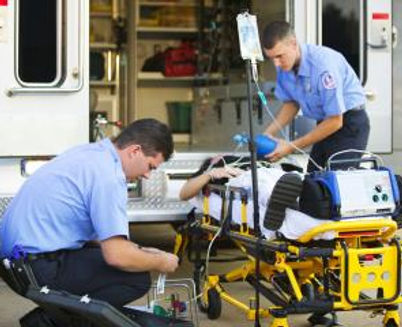
Emergency Medical Responder (EMR)
EMR is a standalone course, but a bridging course also provides learners with a way to move from Canadian Red Cross First Responder to Emergency Medical Responder, recognizing their existing skills and knowledge in a condensed time frame.
Starting your new Career
Becoming an EMR, where you make a difference in individuals and communities.